
Interactive Radiology Education with PixiLearn
Radiology is an indispensable discipline for the diagnosis and follow-up of numerous pathologies. Its scope of application covers multiple medical fields: Neurology, Oncology, Nephrology, Cardiology, Paediatrics, and more.
Radiology education presents a real challenge for its specialist physicians, as the discipline is so transversal and requires maintaining cutting-edge expertise across a very diverse field of competence.
With PixiLearn, we've designed immersive and personalised learning experiences. We've selected experts who will enable you to benefit from practical education in various fields of expertise. Advance your expertise in interpreting X-ray, ultrasound, CT, and MRI images through our interactive platform for radiology education.
Register now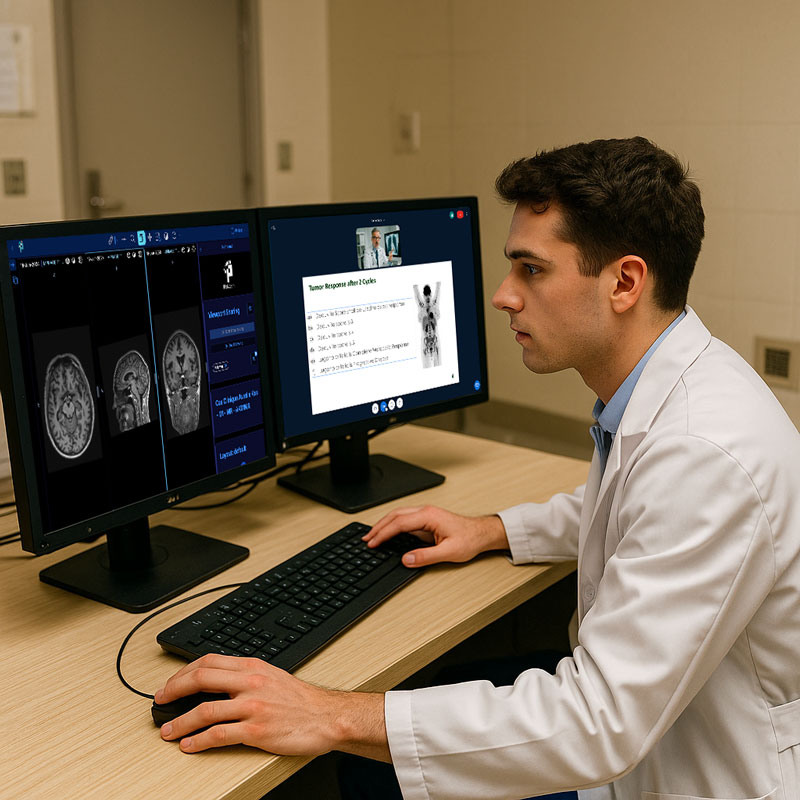
The Importance of Radiology Education
Radiology is a crucial, transversal discipline in medicine. It's involved in countless specialty fields (paediatrics, neurology, cardiology, oncology, pulmonology, orthopaedics, etc.). This versatility presents a real challenge for radiologists to keep their skills up-to-date across such varied domains.
See more
Continuing training in radiology enables you to:
- Master the latest technological advances: new-generation equipment, high-field MRI, photon-counting CT scanners — there are many technological developments in radiology that require continuous re-training.
- Specialise in areas of expertise: Continuing education offers the opportunity to specialise in one of the many clinical applications of radiology.
- Keep your skills up to date by exchanging ideas with professionals who are experts in their fields and recognised throughout the world.
Thanks to PixiLearn, doctors undergoing initial or continuing training benefit from comprehensive, interactive training tailored to the realities of the field. Our training courses enable you to build up your skills effectively and apply them directly to your day-to-day practice.
Our Innovative Pedagogical Methods for Radiology Education
At PixiLearn, we have developed interactive educational methods that promote progressive learning and the practical application of knowledge.
Our approach is based on:
Clinical cases
Interactive clinical case-based learning: We place students/trainees in real-life situations, enabling them to develop their clinical reasoning and make informed decisions.
Interactive virtual classrooms
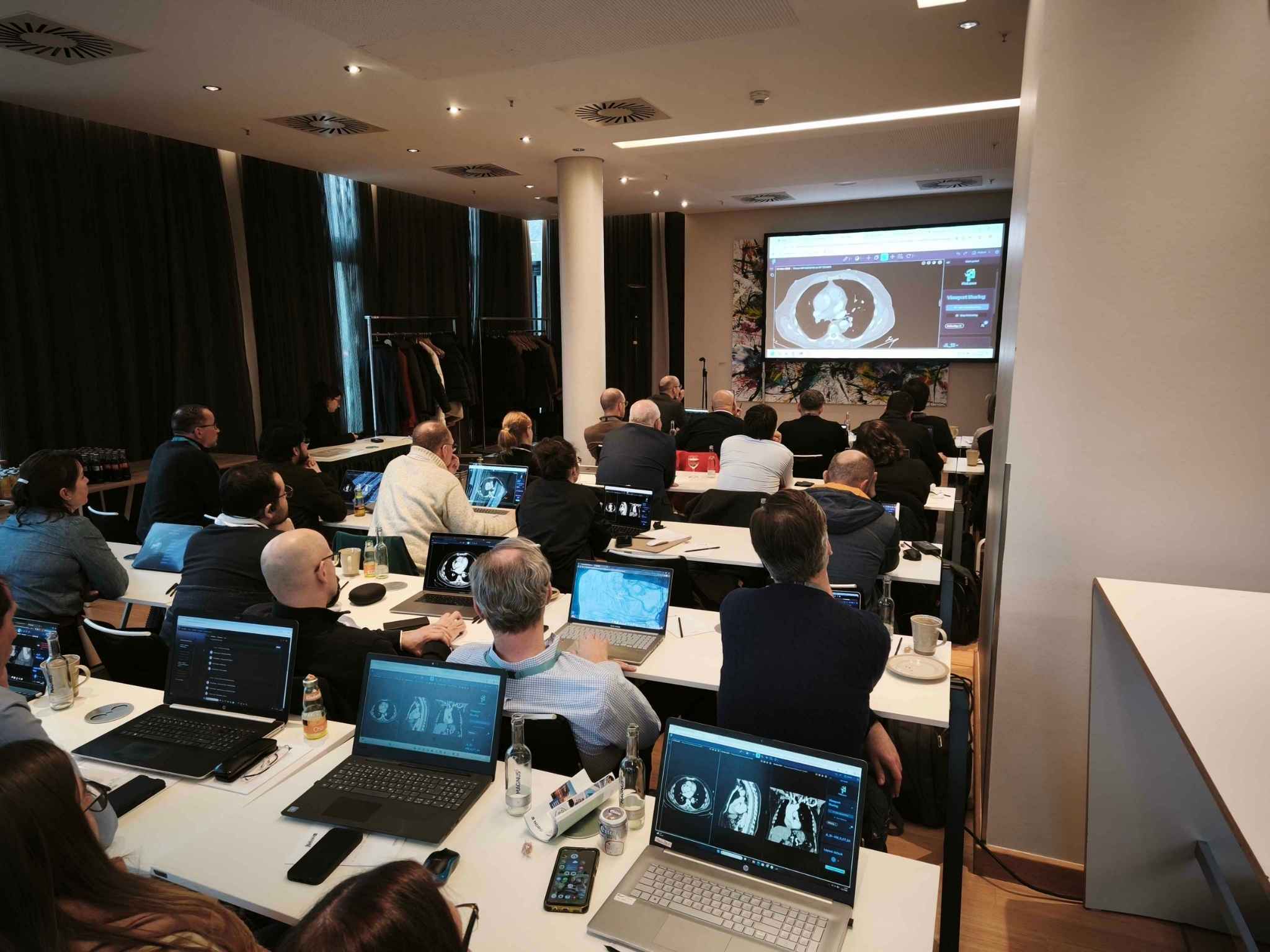
Our experts lead live sessions, encouraging discussion and knowledge sharing.
Simulations
We offer realistic simulations that allow you to manipulate images and practise interpreting them.
MCQs
We use multiple-choice questions before and after each lesson to measure learners' progress.
Personalised support
Each learner receives individualised support, allowing them to progress at their own pace.
Our pedagogy for medical imaging education relies on a combination of theoretical courses, virtual classrooms, and interactive tools to maximise engagement and the assimilation of radiology skills.
Our Radiology Education Tools
Our Imaging Viewer: A Key Tool for Learning Radiology
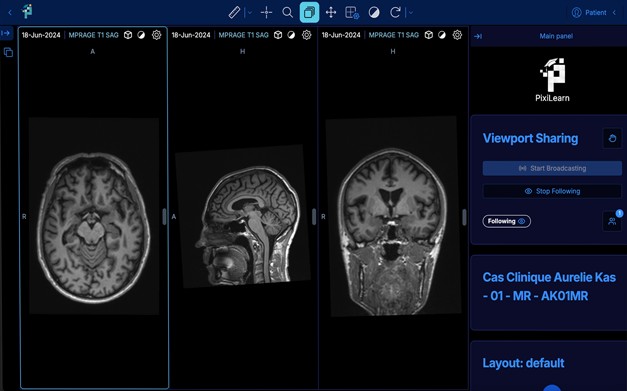
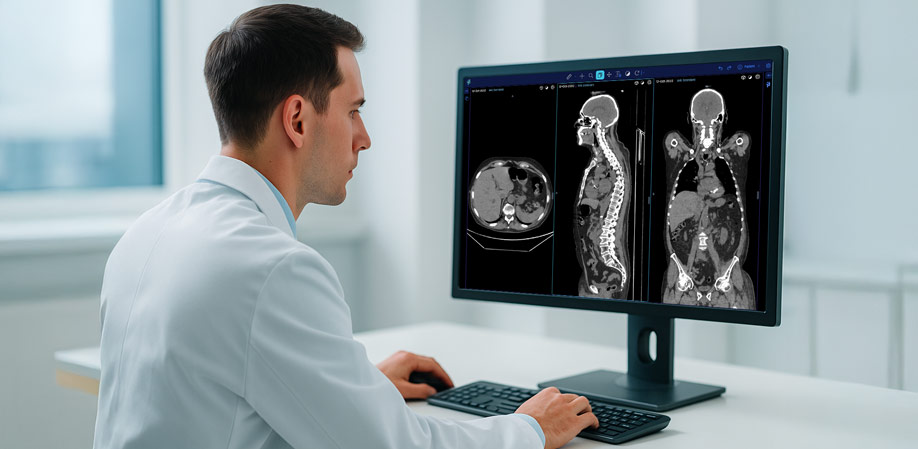
At the heart of our pedagogical approach in radiology is our interactive imaging viewer, a flexible and comprehensive tool that allows you to interpret images just as you would in your own imaging department.
Designed to simulate a real workstation, our viewer allows you to:
- View and manipulate radiography, CT and MRI images with unrivalled precision:
- View images from every angle with Multi Planar Reconstruction (MPR) or Volume Rendering Technique (VRT)
- Adjust display parameters
- Take precise one-dimensional or multi-dimensional measurements
- Perform image fusion: Overlay images from different sequences (e.g. morphological and functional MRI) for a complete and accurate analysis.
- Perform 3D reconstructions: Visualise anatomical structures and lesions in three dimensions for a better understanding.
- Compare examinations: Analyse the evolution of lesions over time by comparing images from different examinations (with synchronised display of imaging volumes)
Our imaging viewer is a true workstation simulator. It is designed to enable you to practise image interpretation and clinical decision-making in realistic situations.
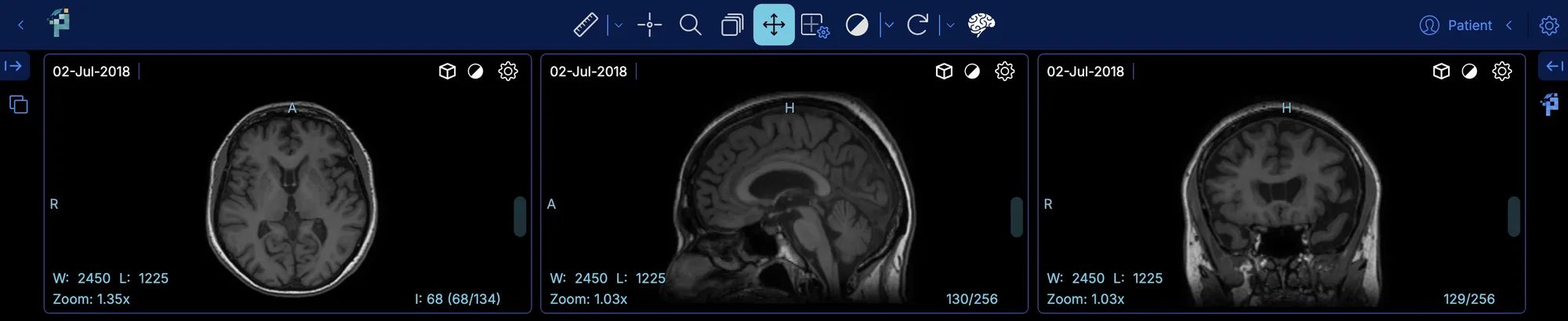
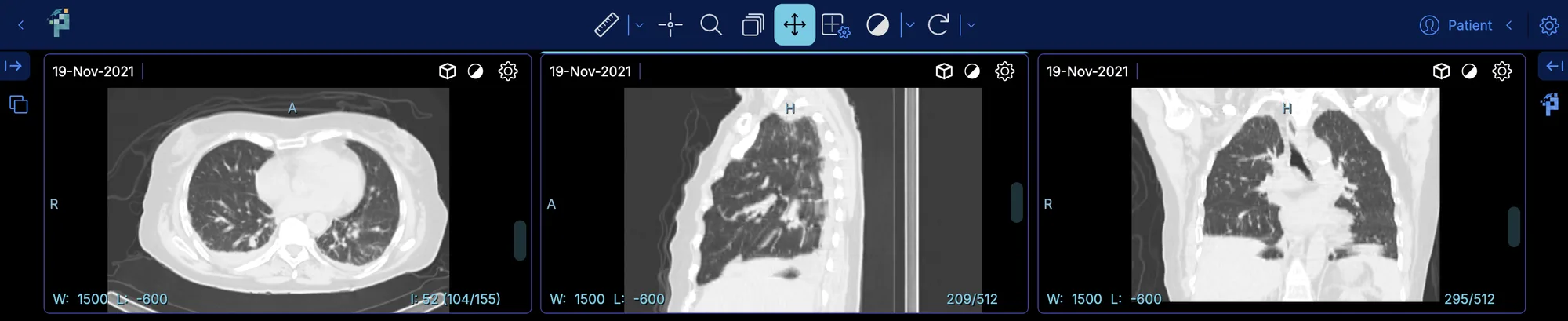
Thanks to this tool, you will develop advanced expertise in radiological image analysis and be able to apply your knowledge in clinical practice.
Our Interactive Virtual Classrooms
Our virtual classrooms are dedicated to interactivity. PixiLearn uses a videoconferencing system specifically designed for education, built to capture attention, foster exchanges, and stimulate participant engagement.
Register now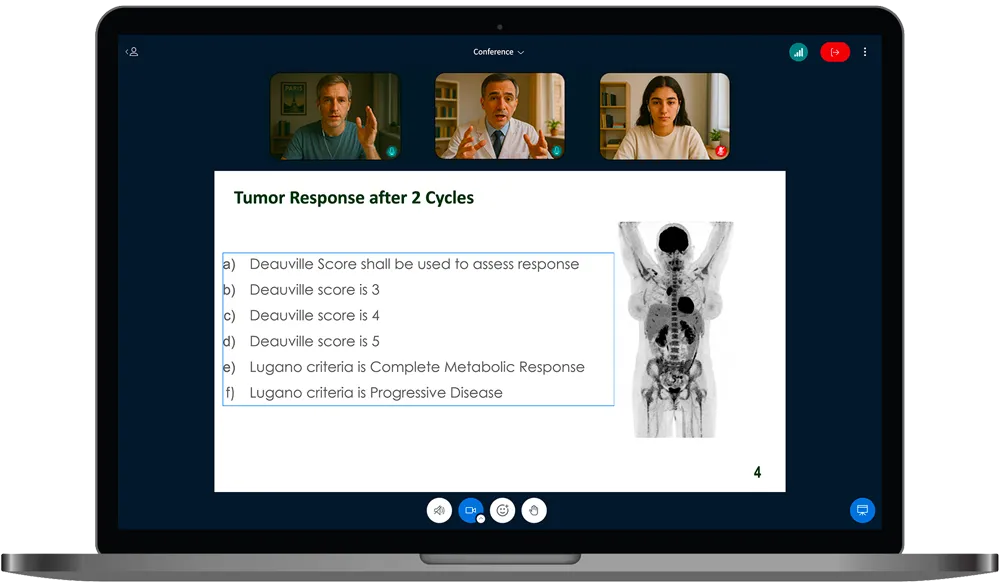
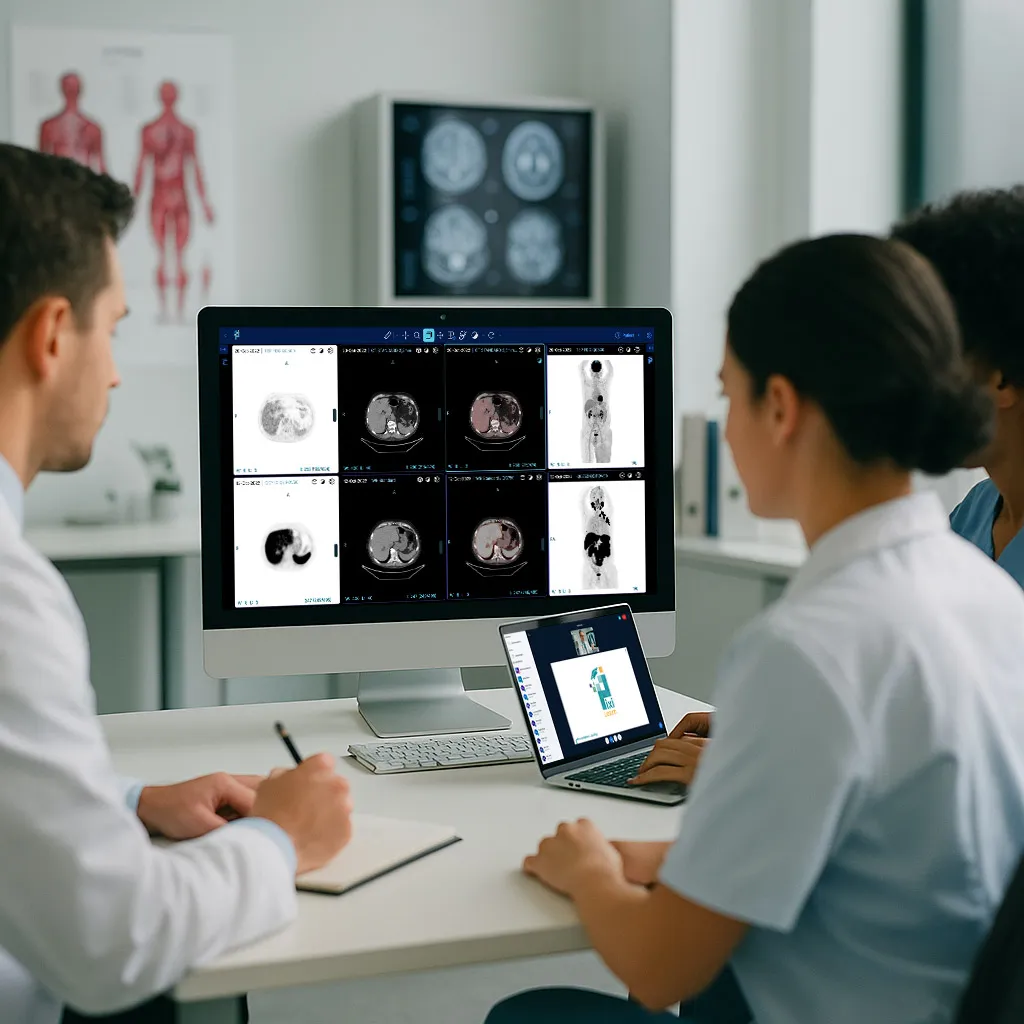
Remote Control of the Viewer by the Lecturer in Radiology Training
We've centred our programmes on clinical cases. With PixiLearn, you'll not only be able to interpret images yourself but also benefit from the lecturer taking control of the viewer during case review.
We've named this feature "Let me show you." It allows the lecturer to control your viewer as if they were moving the mouse on your workstation, demonstrating the elements you needed to see in the clinical case.
With this feature, you'll feel like you have a mentor beside you, sharing their expertise on real clinical cases.
Our Radiology Programmes
Our radiology programmes combine the best of e-learning tools, virtual classrooms, and a high-quality imaging viewer.
PixiLearn's programmes benefit from all these tools:
- Multiple Educational Tools:
- MCQ knowledge assessments.
- Content available at all times (documents, videos, etc.).
- Discussion forums to discuss your expertise with a community of physicians.
- Lively and Interactive Virtual Classrooms:
- With real-time polls.
- Direct interaction with the lecturer.
- Interactive Clinical Cases:
- Featuring innovative technologies.
 Certification issued for training activities
PixiLearn only requires a PC with a web browser and an internet connection; if you're reading this document, you already have everything you need!
Our lecturers on PixiLearn are selected for their clinical expertise and pedagogical competence. We place great importance on meeting our learners' expectations to build unique, high-quality programmes.
Our PixiLearn programmes cover multiple areas of radiology, regardless of the imaging modality (Radiography, Ultrasound, Computed Tomography, Magnetic Resonance Imaging):
Register now